

nesting tables space saving solutions are booming in 2024 for good reason: when square footage is precious, these flexible tables unlock more function in less space—without sacrificing style.
Key Takeaways
- Nesting tables deliver genuine space savings and serve multiple functions in small homes and apartments.
- Smart selection, arrangement, and styling of nesting tables can elevate both storage efficiency and interior aesthetics.
- It’s crucial to choose durable materials, understand sizing, and avoid common mistakes for maximum value and long-term use.
Table of Contents
Understanding Nesting Tables: The Core Concept
Nesting tables are a flexible, multi-level group of coordinating tables designed to stack or “nest” directly beneath each other. When not in use, they collapse into a compact footprint—when needed, they expand to provide extra surface for working, eating, entertaining, or storage. This makes them unbeatable as a space-saving strategy for tight living rooms, micro-apartments, tiny bedrooms, or even as portable desk options in home offices.
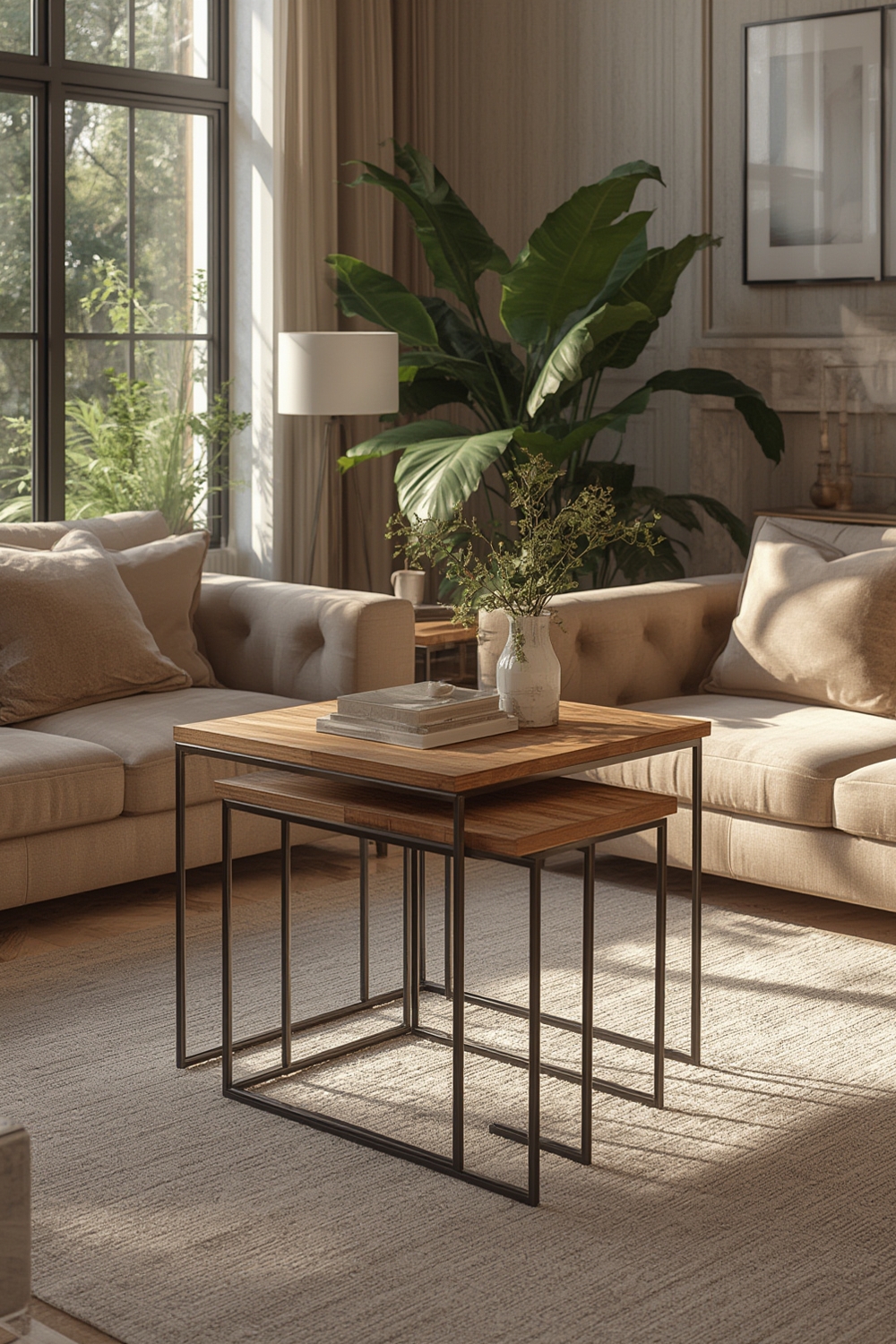
Market data in 2024 shows that nesting tables are outpacing other side/accent tables, reaching a $3.1 billion valuation globally thanks to rising demand among city dwellers and renters. With projected growth to $5.7 billion by 2033, they’re clearly more than a passing trend. Their ability to adapt gives them an edge over permanent, oversized furniture—especially for those with a minimalist mindset or who value a clutter-free home. Want even more versatility? Many modern sets are designed to double as nightstands, laptop stations, or even as modular pieces in modular small space living rooms.
How to Maximize Space with Nesting Tables: Step-by-Step Guide
Efficient nesting table use goes far beyond unboxing and stacking. Here’s how to ensure your nesting tables deliver maximum functional and aesthetic value for any small or flexible living space:
Step 1: Assess Your Needs and Space Constraints
Start by taking precise measurements of available floor space where you plan to use the tables—think living room corners, beside sofas, or near beds. Make a note of potential uses: Will they mainly act as coffee tables, nightstands, snack stations, or temporary work desks?
Step 2: Choose Table Set by Height, Shape, and Flexibility
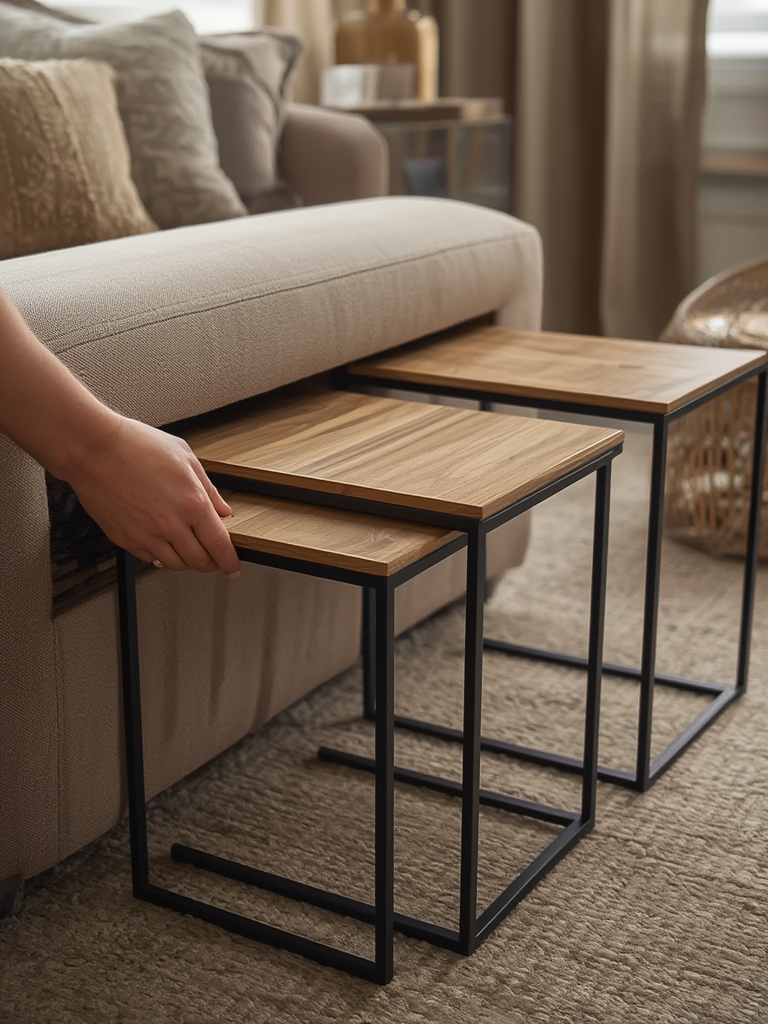
Select sets where the largest table closely matches your main need (e.g., coffee table height or couch arm height). Circular, square, and rounded-edge designs—like those highlighted in our curved furniture for small spaces guide—help the set blend into the room and improve flow in tight layouts. Always check that all tables in a set fully “nest.” Avoid sets that leave protruding or misaligned edges, which create trip hazards and visual mess.
Step 3: Opt for Quality Materials and Construction
Mid-range options now dominate the market, offering a better cost-to-durability ratio. Seek tables crafted from solid wood, powder-coated steel, or sustainable materials like bamboo (more on that in our eco-friendly storage materials guide). Lightweight but sturdy construction is key—flimsy tables will wobble or chip quickly.
Step 4: Maximize Storage Potential and Double-Duty Use
Some sets feature built-in shelves or hidden drawers. Prefer tables that don’t just nest, but also stow baskets or bins beneath them. Use the smallest nesting table as a portable laptop stand, a mini breakfast table, or even an impromptu nightstand. For renters, stackable tables offer a non-permanent space-saving solution that won’t risk security deposits like wall-mounted units can.
Step 5: Style and Rotate for Function and Freshness
Bring out extra tables when you have guests or want a snack station, then tuck everything away after. Layering different heights gives depth and flexibility—use the tallest for lamps or decor, the lowest as a footrest or tray holder. For true minimalism, pair with integrated storage solutions to keep surfaces clutter-free.
Step 6: Shop and Compare for Warranty, Price, and Customization
Although the majority of buyers choose mid-range tables, keep an eye out for premium options with extended warranties and customization abilities. Ask for details about material specs, finish longevity, and weight capacity—few competitor articles address these, yet they’re vital for long-term satisfaction.
Advanced Analysis & Common Pitfalls
While nesting tables are an excellent choice for maximizing small spaces, there are several real-world downsides and common mistakes to avoid:
Common Pitfalls (and Solutions)
- Stability Issues: Cheap or poorly made tables are prone to wobbling, especially on carpet or uneven flooring. Always check assembly hardware and stabilization features; consider rubber non-slip feet if needed.
- Materials Prone to Chipping or Scratching: Many low-cost sets use thin veneers that look good at first but can’t handle daily wear. For lasting value, invest in solid construction—even if up-front cost is higher.
- Outgrown by Storage Needs: It’s easy to underestimate how fast small tables fill up. If in doubt, pair nesting tables with multifunctional storage furniture for overflow items.
- Awkward Sizing: If the nesting tables are too tall/short for your sofa or bed, they’ll look out of place and be underused. Always measure before you buy.
- Assembly and Safety: A surprising number of user complaints relate to missing screws, unclear instructions, or tables tipping when children climb on them. Choose sets with robust assembly reviews and check for tip-prevention features if you have pets or young kids.
| Feature | Entry-Level Sets | Mid-Range Sets | Premium/Custom Sets |
|---|---|---|---|
| Cost | Low ($50–$100) | Moderate ($120–$350) | High ($400+) |
| Materials | Particleboard, plastic, light MDF | Solid wood, steel, bamboo | Exotic wood, marble, designer metal finishes |
| Durability | Low–Fair | Good/Long-lasting | Excellent/Lifetime |
| Warranty | Rare/minimal | 1–5 years (varies) | 5+ years/Custom |
| Customization | No | Limited choices | Fully customizable |
| Eco Credentials | Rare | Sometimes (bamboo/FSC) | Often (sustainably sourced, recycled) |
For the latest regional trends and application splits, see the 2024 Global Nesting Tables Market Report. Want to compare alternatives for extremely tiny spaces? Our wall-mounted folding table guide explores ultra-compact solutions for tight studios or home offices.
Conclusion
Nesting tables space saving strategies are a powerful, proven way to reclaim floor area and elevate functionality in any small or flexible home. By choosing the right size, materials, and arrangement approach—while keeping an eye on realistic limitations—you’ll gain a smarter, more versatile home setup. Ready to transform your living space? Explore our other expert space-saving guides and start making every square foot count!
FAQ
Are nesting tables really better at saving space than traditional coffee tables?
Yes. Nesting tables can be stored as a single compact unit but split apart when you need extra surfaces—traditional coffee tables take up the same footprint all the time. This flexibility is especially valuable in multi-use rooms or small apartments.
What materials offer the best blend of durability and style in nesting table sets?
Solid wood, powder-coated steel, bamboo, and select composite materials deliver both strength and a premium look. Avoid particleboard or plastic if you want tables that last beyond a couple of years of regular use.
Is it safe to use nesting tables in households with children?
Generally yes, but look for sets with stable, wide bases and avoid those with glass if safety is a concern. Always follow manufacturer guidelines for assembly—some basic sets can tip if climbed on or pulled.
How do nesting tables compare to other space-saving furniture?
Nesting tables are among the easiest options to add or move without permanent changes. However, built-in or wall-mounted tables—like in our wall-mounted folding table guide—may save even more space in ultra-small rooms, but lack the mobility and multipurpose flexibility of nesting sets.
What is the average price and warranty range for mid-tier nesting tables?
Most mid-range sets cost between $120 and $350, with warranty periods ranging from 1 to 5 years depending on the manufacturer and materials. Always check what the warranty covers, as surface finishes are a common weak point.
[…] Coffee & Side Tables: Skip the massive central coffee table. Try nesting tables or slender consoles—these tuck away easily and flex as needed. See our nesting tables space saving guide. […]